


Love is the Message, the Message is Death (2016) – one of Arthur Jafa’s most well-known, celebrated, and globally resonant works – assembles a vast visual record of Black life in the United States. Drawn from historical footage, news broadcasts, viral videos, popular movies, sports coverage, music videos, and footage shot by the artist himself, Jafa sequences a rapid succession of moving images into a work that is, in turns, devastating and life-affirming. Set to Kanye West’s gospel-infused anthem Ultralight Beam, the nearly eight-minute montage traces the enduring realities of anti-Black violence alongside extraordinary and everyday articulations of joy, movement, creativity, spirituality, and resistance.
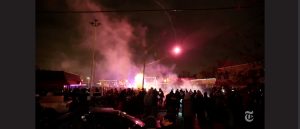
Premiering in the aftermath of the 2016 U.S. presidential election – and in the context of then-unprecedented and widespread citizen documentation of police violence against Black people – Love is the Message confronts viewers with the recursive nature of racial injustice. However, Jafa refuses to allow the spectres of brutality, grief, and historical trauma to become the defining image of Black existence. Instead, Love is the Message insists upon the irreducible complexity of Black life, where brutality, mourning, and terror are juxtaposed with beauty, celebration, and transcendence.
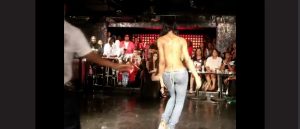
Throughout the work, dance and movement emerge as powerful acts of expression: undulating crowds Swag Surf through a packed gymnasium, Storyboard P. glides smoothly across a dancefloor, performers vogue in a jubilant ballroom, and Serena Williams Crip Walks on the court after winning a gold medal at the 2012 Summer Olympics. Movement becomes a language through which joy, agency, perseverance, and solidarity are articulated.
Jafa has often been quoted describing his ambition toward creating a moving-image aesthetic with “the power, beauty, and alienation of Black music.” Deploying a strategy he calls “Black visual intonation,” Jafa manipulates the work’s visual rhythm at the level of individual frames, subtly stretching or compressing moments to produce a visual cadence that recalls the forms and expressions of jazz, gospel, and virtuosic Black vocal traditions. Equally important is his strategy of creating what he calls “affective proximity,”1 or the practice of bringing together images from radically different contexts to awaken reflection and emotion. In moments, the clips he sequences resonate and rhyme with each other; at other times they suggest contradiction; in turns, the images sit in tension with the overlaid lyrics, or else vibrate closely with them.
Love is the Message is full of echoes: within the visual grammar of the work itself as well as between our past and present realities. Nearly a decade after its premiere, the work remains urgent. Its images continue to reverberate and remind us that history is neither linear nor resolved. Yet amid persistent cycles of violence, Jafa also reveals what endures: the revolutionary force within the creation of culture, community, movement, and love.
—
1 A term borrowed from filmmaker/artist John Akomfrah.